
Mentorship Statement
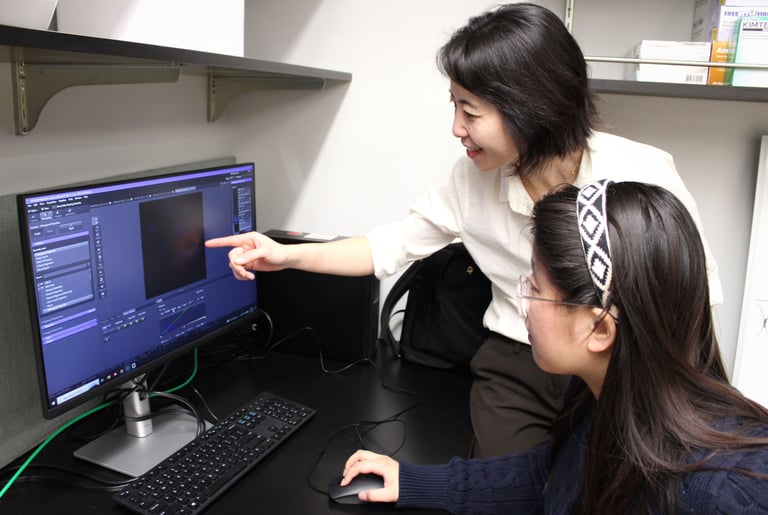

About the PI:
Jing Hughes, MD PhD: Associate Professor of Medicine at Yale University since 2025; previously at Washington University 2019-2025. I have mentored trainees across career stages, from undergraduates to postdoctoral to clinical fellows and visiting scientists. I am committed to fostering scientific careers and consider mentoring the most important part of my job.
Structured training activities
Trainees in the Hughes Lab will receive guidance from the PI and senior lab members on:
Experimental design
Data analysis and interpretation
Manuscript and grant writing
Scientific data integrity
Written and oral communication skills
Core techniques used in the lab include:
Rodent surgery and pancreatic islet isolation
Tissue culture and islet function testing
Western blotting, RNA isolation, quantitative PCR, ELISA
Transmission and scanning electron microscopy
Quantitative fluorescence microscopy, live-cell imaging
MATLAB data analysis
The lab holds frequent social outings and team-building events. We emphasize rest and time away from lab for personal well-being.
The PI’s office has an open-door policy. We do informal check-ins with everyone daily. We also hold structured one-on-one meetings and lab meetings weekly. All trainees have the opportunity to present within the institution and at national/international conferences. Everyone will meet with the PI for formal feedback on research and career development at least annually. Ethics training will be conducted via institution courses and regular discussions within the lab.
The PI promotes trainee success by publishing their work in a timely manner, supporting their grant applications, facilitating professional networking, and recommending them for awards and speaking opportunities. Individual learning opportunities including visits to collaborator labs and conference travel are covered by the lab.
The PI holds a clinical appointment and offers shadowing experiences to those interested on the inpatient and outpatient endocrine services.
Resources and support. Our lab is located in the 101 College Street building at Yale School of Medicine. We have dedicated imaging equipment and share resources with other islet research labs in the Section of Endocrinology and Yale Diabetes Research Center.
Specific for postdocs: commitment to trainee careers and plans for transitioning to independence. The PI will work with each postdoctoral trainee to develop their path to independence via the following milestones:
Manuscript publications
Identifying and obtaining intramural funding through the Diabetes Research Center (DRC), T32 training grant, core pilot grants, and Institute of Clinical and Translational Sciences (ICTS)
Extramural funding through NIH K awards and foundation grants
Discussion about division and ownership of research projects
Tools, reagents, and projects developed by each postdoc will be theirs to take to implement their independent research career. This is a promise from the start, to allow the necessary freedom to pursue new research directions.
Guidance and support
Career development


Join us
The Hughes Lab is recruiting new members on a rolling basis. Candidates with relevant experience and a strong interest in our research - please send an inquiry and CV to jing.hughes@yale.edu.